- +971 56 918 6895
- sales@globaltechuae.com
- Salah Al Din Road, Deira, Dubai-UAE

Mini PC Supplier UAE: Selection & Sourcing Guide 2026

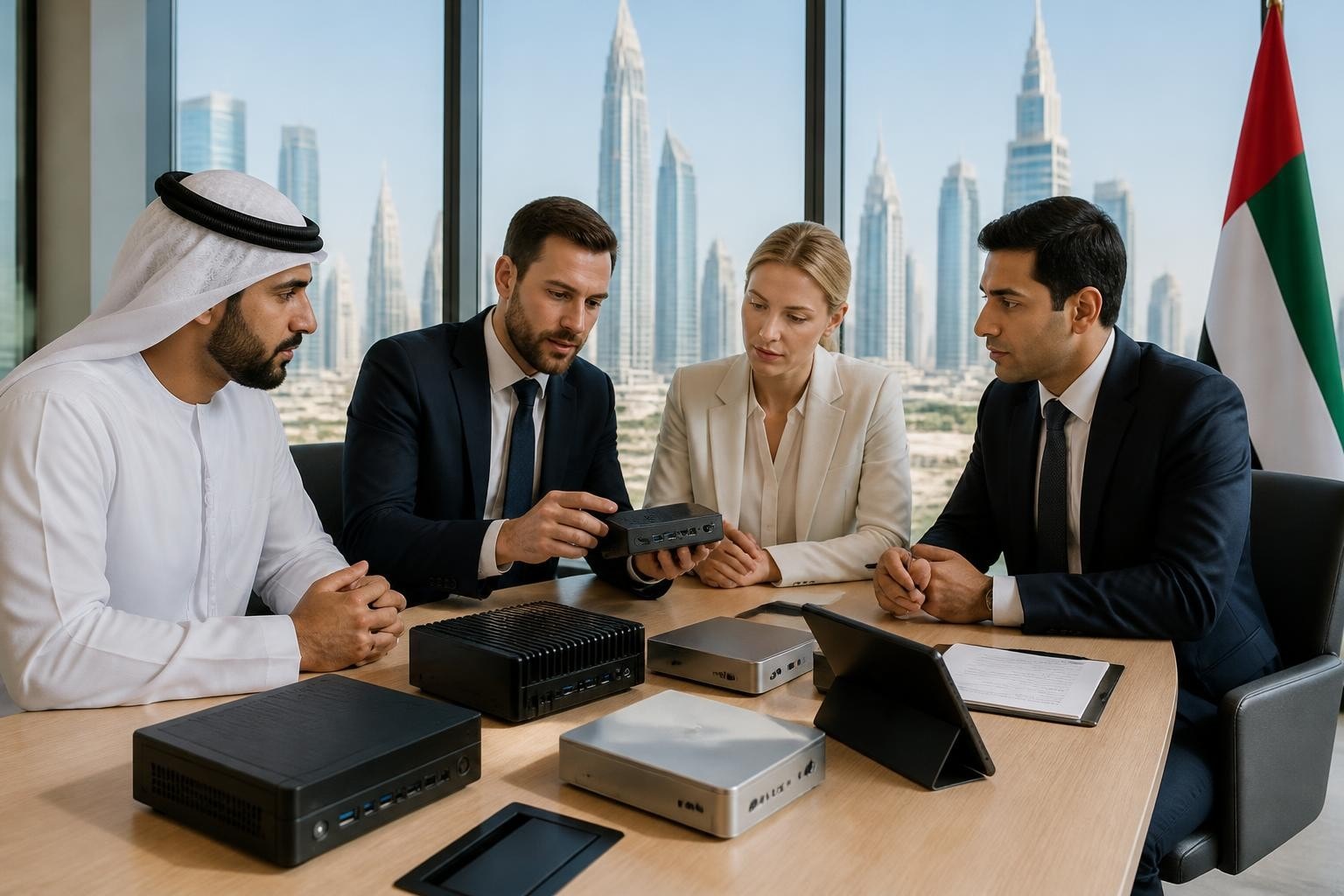
The United Arab Emirates continues to expand its digital infrastructure and smart city initiatives, driving unprecedented demand for compact, powerful computing solutions. Organizations across government, healthcare, education, and commercial sectors increasingly rely on mini PCs to power everything from digital signage to edge computing deployments. Finding the right mini pc supplier uae requires understanding technical specifications, regulatory compliance, and the unique requirements of the regional market. This comprehensive guide examines the critical factors businesses and procurement teams must consider when selecting IT hardware partners in the Emirates.
Understanding the UAE Mini PC Market Landscape
The UAE has positioned itself as a regional technology hub, with Dubai and Abu Dhabi leading digital transformation initiatives. The demand for space-efficient computing solutions has grown exponentially as organizations optimize real estate costs while maintaining performance standards. Mini PCs deliver desktop-class computing in form factors 80% smaller than traditional towers, making them ideal for hot-desking environments, kiosks, and industrial automation.
Market research indicates substantial growth projections for compact computing devices across the Middle East. According to global mini PC market analysis, the sector demonstrates strong compound annual growth driven by IoT adoption, smart city implementations, and remote work infrastructure. UAE organizations particularly value energy efficiency, with many mini PCs consuming 65-90% less power than conventional desktops, a critical consideration given regional cooling costs.
Key Applications Driving Demand
- Digital signage and retail displays requiring compact, reliable 24/7 operation
- Healthcare workstations with space constraints and stringent uptime requirements
- Educational institutions deploying flexible computer labs and STEM facilities
- Government service centers supporting citizen engagement and e-government initiatives
- Industrial control systems requiring fanless operation in dusty environments
- Edge computing nodes processing data locally for latency-sensitive applications
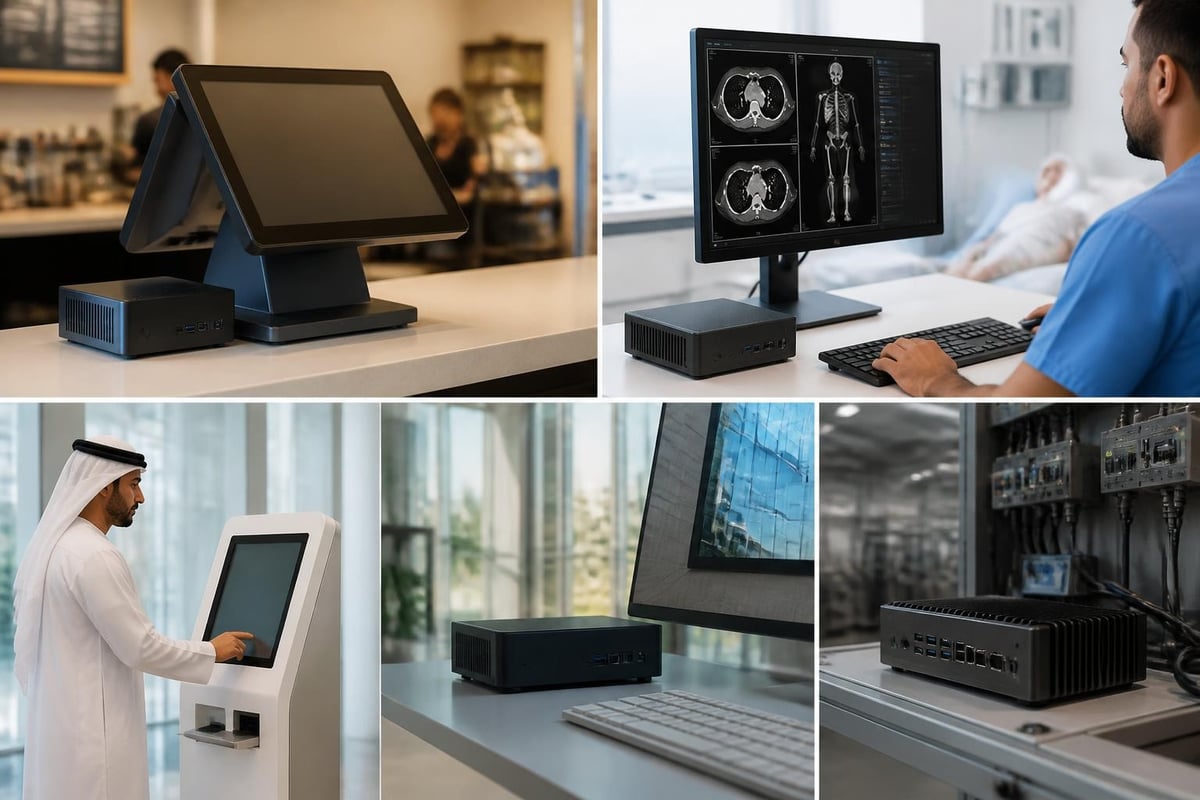
Organizations seeking a mini pc supplier uae must evaluate whether providers understand these specific use cases and can recommend appropriate specifications for each scenario.
Regulatory Compliance and Import Requirements
Working with IT hardware suppliers in the UAE requires navigating several regulatory frameworks. The Telecommunications and Digital Government Regulatory Authority (TDRA) oversees equipment registration and type approval for devices sold in the Emirates. Any mini PC containing wireless capabilities (WiFi, Bluetooth) must secure TDRA approval before commercial distribution. Responsible suppliers handle this certification process and provide documentation confirming compliance.
Import procedures follow guidelines established by federal customs authorities. The Federal Authority for Identity, Citizenship, Customs & Port Security administers the Authorized Economic Operator (AEO) programme, which can significantly expedite customs clearance for qualified IT suppliers. Suppliers participating in AEO demonstrate enhanced security standards and regulatory compliance, reducing delays for time-sensitive hardware deployments.
Compliance Checklist for Mini PC Procurement
| Requirement | Authority | Impact on Timeline |
|---|---|---|
| TDRA Type Approval | TDRA | 2-4 weeks (if not pre-certified) |
| Customs Classification | Dubai Customs | Variable duty rates apply |
| AEO Certification | ICP | Faster clearance (optional) |
| Warranty Documentation | Supplier | Required for service claims |
| Energy Efficiency Ratings | Local Standards | Purchasing preference criteria |
Dubai Customs publishes detailed customs notices and policy documents that clarify tariff classifications and import procedures for electronic equipment. A knowledgeable mini pc supplier uae maintains current documentation and guides customers through these requirements, minimizing procurement delays.
Government procurement follows additional protocols. The UAE Ministry of Finance federal procurement bylaws establish registration requirements, bidding processes, and supplier qualification criteria for federal tenders. Suppliers supporting government clients must maintain proper registration and understand competitive bidding frameworks.
Technical Specifications and Selection Criteria
Choosing the appropriate mini PC configuration requires matching hardware capabilities to workload demands. Modern mini PCs span a wide performance spectrum, from basic Celeron-powered units suitable for web browsing and office applications to powerful units with Intel Core i7 or AMD Ryzen processors handling CAD, video editing, and data analytics.
Processor and Performance Considerations
Current-generation mini PCs utilize several processor families, each optimized for different scenarios:
Intel Core Series: 12th and 13th generation processors deliver excellent single-thread performance for business applications. TDP ranges from 15W in ultra-compact models to 65W in performance variants. Integrated Iris Xe graphics handle multiple 4K displays without discrete GPUs.
AMD Ryzen Series: Ryzen 5000 and 7000 series APUs provide exceptional multi-core performance and integrated Radeon graphics. Particularly effective for parallel workloads, virtualization, and graphics-intensive tasks while maintaining competitive power consumption.
Intel Atom and Celeron: Budget-friendly options for basic computing, kiosks, and dedicated single-application deployments. Lower performance but significantly reduced cost and power draw.
Organizations should benchmark requirements against realistic workloads rather than over-specifying hardware. A mini pc supplier uae with technical expertise helps right-size configurations, avoiding unnecessary expenditure while ensuring adequate performance headroom.
Memory, Storage, and Expansion
| Configuration Element | Entry-Level | Mid-Range | High-Performance |
|---|---|---|---|
| RAM | 8GB DDR4 | 16GB DDR4/DDR5 | 32-64GB DDR5 |
| Primary Storage | 256GB SSD | 512GB NVMe | 1TB+ NVMe Gen4 |
| Secondary Storage | Optional HDD | M.2 expansion | Multiple NVMe slots |
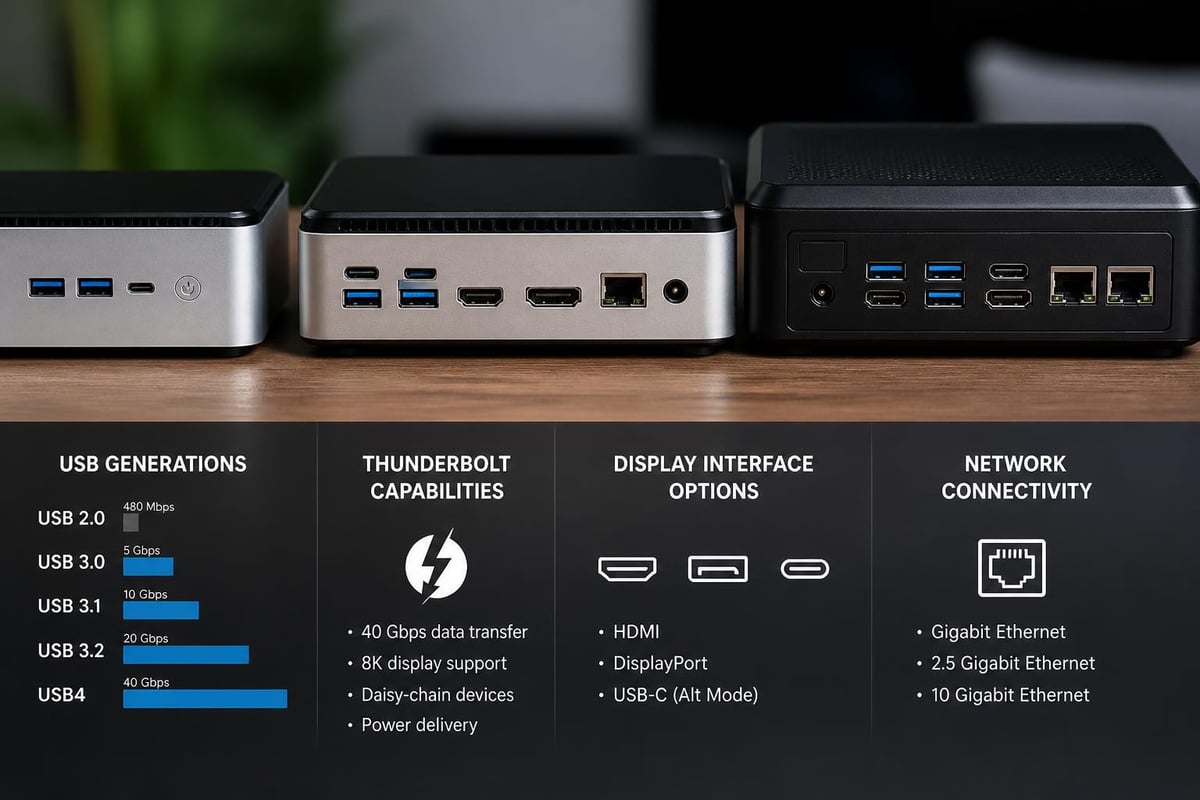
| USB Ports | 4-6 USB 3.2 | 6-8 + USB-C | USB4/Thunderbolt |
| Display Outputs | 2x HDMI | 3x video outputs | 4K@60Hz multi-display |
Modern mini PCs increasingly adopt USB4 and Thunderbolt connectivity standards. The USB Implementers Forum maintains official specifications for USB-C, USB 3.2, and USB4 standards, ensuring interoperability with peripherals and docking solutions. Enterprise deployments benefit from standardizing on suppliers that implement these protocols correctly, verified through USB-IF certification programmes.
Evaluating Supplier Capabilities and Support Services
Beyond hardware specifications, the supplier relationship determines long-term success. A qualified mini pc supplier uae provides comprehensive pre-sales consultation, competitive pricing structures, and post-sales support infrastructure. Organizations should evaluate several key dimensions when selecting IT hardware partners.
Pre-Sales Consultation and Solution Design
Expert suppliers invest time understanding customer environments before recommending configurations. This consultation should cover:
- Current infrastructure and integration requirements
- Performance benchmarks for critical applications
- Scalability plans and future growth projections
- Budget constraints and total cost of ownership analysis
- Deployment timelines and phased rollout strategies
Top-tier suppliers maintain demonstration units allowing hands-on evaluation. Testing actual workflows on proposed hardware eliminates speculation and reduces deployment risks.
Warranty, Service, and Technical Support
Hardware reliability matters significantly in mission-critical deployments. Commercial mini PCs typically offer 3-5 year warranties with varying service levels. Evaluate these support dimensions:
- On-site vs. depot service: On-site repair minimizes downtime for distributed deployments
- Response time commitments: Next-business-day vs. same-day response SLAs
- Spare parts availability: Local inventory reduces repair delays
- Technical support hours: Business hours vs. 24/7 support for critical systems
- Advanced replacement: Temporary replacement units during repairs
Organizations deploying mini PCs across multiple locations particularly value suppliers maintaining UAE-based service infrastructure. International-only support creates delays and complications in the Middle East time zone.
Volume Pricing and Procurement Flexibility
Enterprise and government buyers require flexible procurement models. Established suppliers offer:
- Volume discounts scaling with order quantities
- Framework agreements for multi-year purchasing
- Configuration standardization reducing complexity
- Staged delivery matching project timelines
- Asset tagging and pre-configuration services
Global Tronix Computer Trading LLC exemplifies comprehensive IT product suppliers serving both Africa and the UAE, offering extensive inventories and regional expertise that streamline large-scale hardware deployments.
Edge Computing and Smart City Applications
The UAE's ambitious smart city initiatives create specialized opportunities for mini PC deployments. Cities like Dubai and Abu Dhabi implement IoT sensor networks, intelligent traffic management, and distributed analytics requiring edge computing infrastructure. Research from comprehensive edge computing surveys demonstrates that processing data locally at the network edge reduces latency by 60-80% compared to cloud-only architectures, essential for real-time systems.
Mini PCs serve as ideal edge nodes due to their compact footprint, low power consumption, and sufficient processing power for local analytics. Typical smart city implementations include:
Intelligent Transportation: Traffic cameras with local video analytics reduce bandwidth requirements by processing footage locally, transmitting only relevant events to central systems. Mini PCs deployed at intersections run computer vision algorithms, detecting incidents and adjusting signal timing in real-time.
Environmental Monitoring: Air quality sensors distributed throughout urban areas connect to mini PC gateways that aggregate data, apply filtering algorithms, and communicate trends to environmental management systems. Local processing enables immediate alerts when thresholds are exceeded.
Public Safety: Surveillance systems in parks, transit stations, and public buildings utilize mini PCs for facial recognition, crowd counting, and anomaly detection. Edge processing protects privacy by analyzing video locally rather than transmitting raw footage.
Technical Requirements for Edge Deployments
| Specification | Requirement | Rationale |
|---|---|---|
| Operating Temperature | -10°C to 60°C | Outdoor/industrial environments |
| Fanless Design | Passive cooling preferred | Reliability, dust resistance |
| Wide-Range PSU | 100-240V AC or PoE | Flexible power options |
| Secure Boot | TPM 2.0 minimum | Security for distributed nodes |
| Remote Management | AMT/vPro support | Manage distributed devices |
Selecting a mini pc supplier uae experienced in edge computing ensures proper hardware selection for these demanding scenarios. Industrial-grade mini PCs withstand temperature extremes, vibration, and continuous operation that standard office models cannot sustain.
Integration with Existing IT Infrastructure
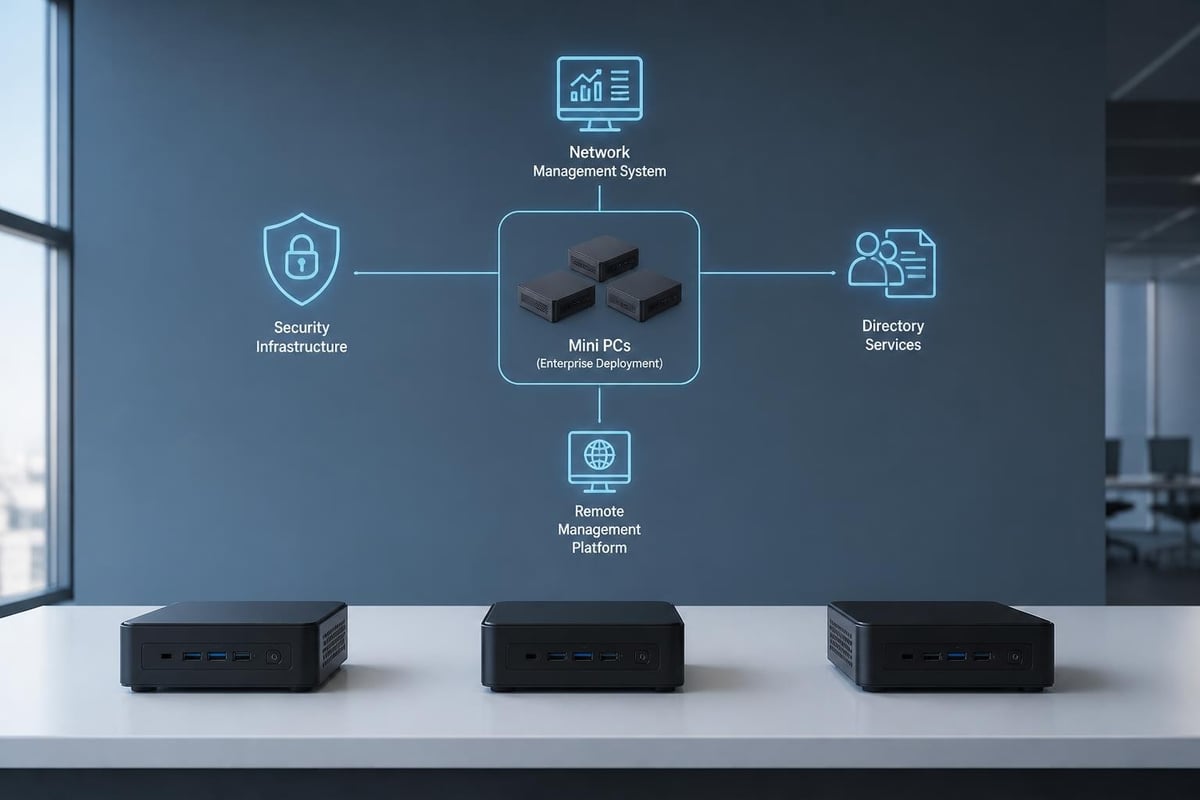
Successful mini PC deployments require seamless integration with networking, management, and security infrastructure. Organizations should verify compatibility across several technical layers before committing to suppliers.
Network Integration and Management
Modern mini PCs support enterprise networking standards including:
- Gigabit Ethernet (1000BASE-T) with some models offering 2.5GbE or 10GbE
- WiFi 6 (802.11ax) and WiFi 6E providing high-bandwidth wireless connectivity
- Bluetooth 5.2 for peripheral integration
- PXE boot for network-based imaging and deployment
- Wake-on-LAN for centralized power management
Organizations using Microsoft Endpoint Manager, VMware Workspace ONE, or similar management platforms need mini PCs supporting these ecosystems. Intel vPro and AMD Pro platforms enable remote management, diagnostics, and even recovery of powered-off or crashed systems, critical for distributed deployments.
Security and Compliance Considerations
Enterprise security requirements influence hardware selection significantly. Key features include:
- Trusted Platform Module (TPM) 2.0: Hardware-based encryption key storage required for BitLocker and many compliance frameworks
- Secure Boot: UEFI firmware verification preventing rootkit and bootkit attacks
- Physical Security: Kensington lock slots, chassis intrusion detection, and tamper-evident seals
- BIOS Protection: Password protection, boot order lockdown, and firmware update authentication
- Network Access Control: MAC address reporting and 802.1X authentication support
Healthcare organizations subject to patient data regulations and financial institutions with strict security mandates require mini PCs meeting these enhanced security specifications. Reputable suppliers understand these requirements and stock appropriate models.
Peripheral Compatibility and Workspace Integration
Mini PCs function as the computing foundation but require careful peripheral integration to create productive workspaces. Organizations transitioning from traditional desktops must account for displays, input devices, and specialized peripherals.
Most modern mini PCs include VESA mounting brackets, allowing direct attachment to monitor backs, eliminating desk clutter entirely. This mounting approach works particularly well in space-constrained environments like healthcare nurse stations, retail checkout counters, and reception areas.
Display and Input Considerations
Multi-monitor configurations require adequate video outputs. Standard configurations include:
- Dual-monitor: 2x HDMI or 1x HDMI + 1x DisplayPort
- Triple-monitor: 2x HDMI + 1x DisplayPort or USB-C with DisplayPort alt mode
- Quad-monitor: Thunderbolt 4 or USB4 supporting daisy-chaining
Organizations standardizing on 4K displays should verify mini PCs support required resolutions at 60Hz refresh rates. Older or budget models may limit 4K to 30Hz, creating noticeable lag and poor user experience.
Wireless peripherals simplify cable management in VESA-mounted configurations. Products like the Logitech Wireless Mouse M325 offer reliable wireless connectivity with extended battery life, ideal for clean desk deployments. USB receiver dongles consume minimal space on compact mini PCs.
Specialized Peripheral Support
Industry-specific applications often require specialized hardware:
- Healthcare: Barcode scanners, card readers, vital sign monitors
- Retail: Cash drawers, receipt printers, payment terminals
- Manufacturing: Serial devices, industrial sensors, programmable controllers
- Education: Document cameras, interactive whiteboards, science equipment
Organizations deploying specialized peripherals should verify mini PCs include necessary connectivity (serial ports, parallel ports, legacy USB) and confirm driver support for the target operating system. A technically knowledgeable mini pc supplier uae helps identify potential compatibility issues before deployment.
Comparing Vendor Options and Making Selection Decisions
The UAE market includes multiple IT hardware suppliers ranging from international distributors to regional specialists. Organizations benefit from evaluating several suppliers against consistent criteria to identify the optimal partnership.
Evaluation Framework
Create a weighted scoring matrix incorporating these factors:
Technical Capability (30%): Range of configurations available, access to latest-generation hardware, ability to customize specifications, technical pre-sales support quality, demonstration and evaluation programmes.
Pricing and Value (25%): Base unit pricing competitiveness, volume discount structures, bundle pricing for displays and peripherals, warranty cost, total cost of ownership analysis.
Service and Support (25%): Warranty terms and service levels, on-site vs. depot repair, spare parts availability, technical support quality and availability, training and onboarding assistance.
Logistics and Operations (15%): Inventory availability and lead times, delivery reliability, packaging and shipping quality, asset tagging services, staged delivery flexibility.
Business Stability (5%): Years in operation, financial stability, manufacturer partnerships and authorizations, customer references, local presence and facilities.
Request detailed proposals addressing each criterion with specific commitments. Vague promises of "excellent support" provide no basis for comparison versus documented SLAs specifying response times and resolution processes.
Reference Checks and Pilot Programmes
Before committing to large-scale deployments, conduct thorough due diligence:
- Contact three or more customer references in similar industries and deployment scales
- Arrange site visits to observe installations and discuss real-world experiences
- Deploy pilot programmes with 10-20 units in representative environments
- Test support responsiveness by submitting technical inquiries during pilot
- Evaluate delivered quality, packaging protection, and documentation completeness
Pilot programmes reveal integration challenges, user acceptance issues, and support quality that aren't apparent from specifications alone. The cost of piloting represents valuable insurance against expensive deployment failures.
Long-Term Partnership and Technology Roadmapping
IT hardware relationships extend beyond initial purchases to ongoing technology refresh cycles and strategic planning. Organizations maximize value by cultivating partnerships with suppliers who invest in understanding business objectives and technology strategies.
Technology Refresh Planning
Most organizations operate on 3-5 year hardware refresh cycles, replacing aging equipment before warranty expiration and performance degradation impacts productivity. Strategic suppliers assist with refresh planning:
- Tracking deployed hardware ages and warranty expirations
- Forecasting upcoming refresh requirements based on deployment timelines
- Recommending refresh timing aligned with budget cycles
- Trade-in or buyback programmes for replaced equipment
- Migration services and data transfer assistance
Proactive refresh planning prevents emergency purchases at unfavorable pricing when critical hardware fails unexpectedly outside warranty periods.
Staying Current with Technology Evolution
Computing technology evolves rapidly. Processors, memory, storage, and connectivity standards advance continuously. Suppliers providing technology roadmap briefings help organizations plan appropriately:
- Understanding upcoming processor generations and performance improvements
- Anticipating connectivity standard transitions (USB4, WiFi 7, Thunderbolt 5)
- Evaluating emerging form factors and cooling technologies
- Assessing operating system compatibility and support timelines
- Planning for security requirement evolution
Organizations working with forward-looking suppliers avoid technology dead-ends and ensure purchases remain supportable throughout their service lives.
Selecting the right mini PC supplier in the UAE requires balancing technical specifications, regulatory compliance, service capabilities, and strategic partnership potential. Organizations that invest time evaluating suppliers against comprehensive criteria and conducting thorough pilots position themselves for successful deployments that deliver lasting value. Whether you're outfitting a new office, refreshing aging infrastructure, or implementing edge computing for smart city initiatives, Global Tronix Computer Trading LLC brings deep regional expertise and a comprehensive portfolio of IT solutions to support your technology objectives across the UAE and Africa.
