- +971 56 918 6895
- sales@globaltechuae.com
- Salah Al Din Road, Deira, Dubai-UAE

Computer Server Supplier UAE: 2026 Procurement Guide

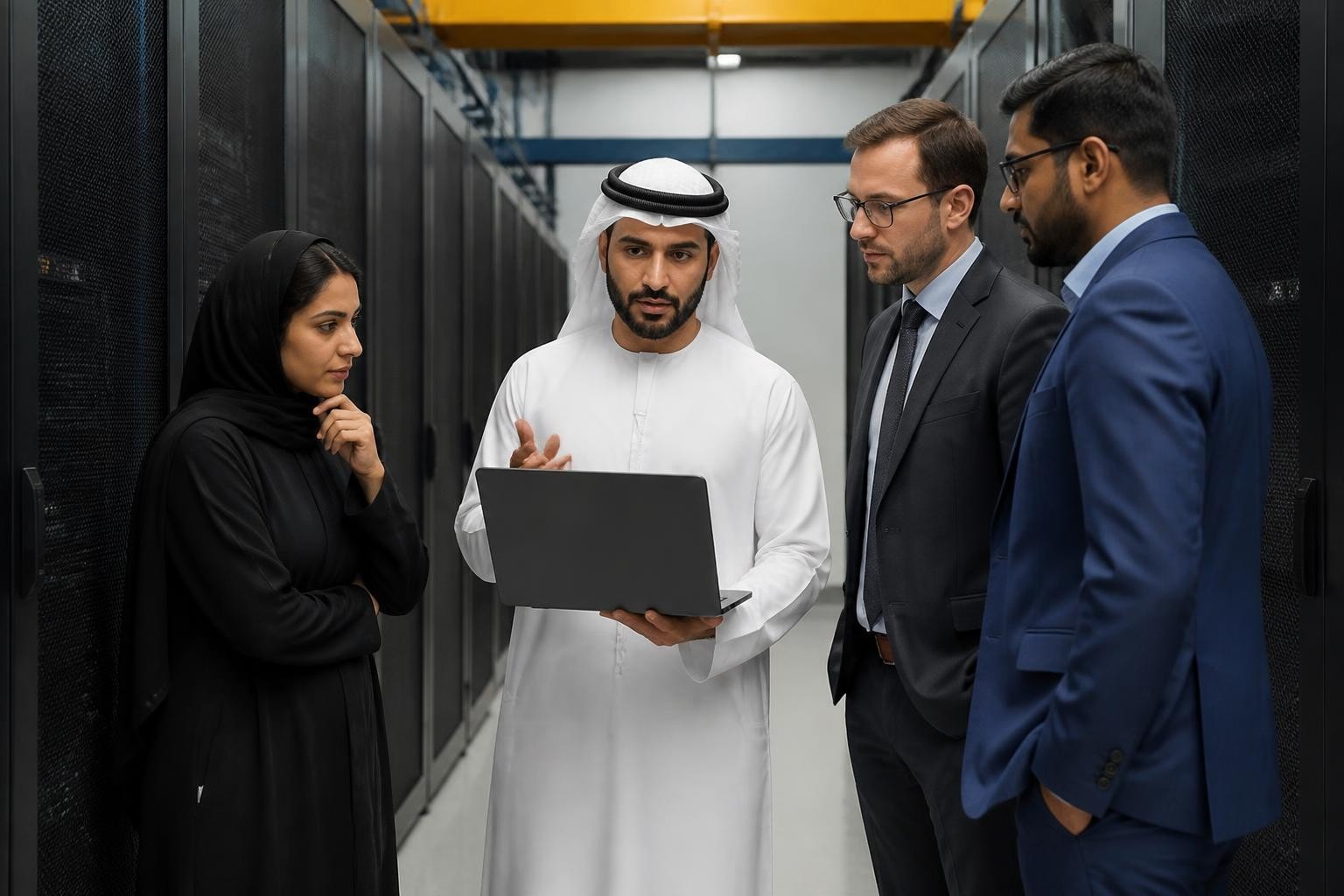
Selecting the right computer server supplier UAE partnership represents a critical infrastructure decision for organizations across the Emirates. With digital transformation accelerating and data center investments reaching new heights in 2026, businesses face increasingly complex choices when procuring server hardware. From navigating import regulations to ensuring compliance with telecom standards, the landscape demands careful vendor evaluation and strategic planning. This guide explores the essential considerations, regulatory requirements, and best practices for partnering with a reliable computer server supplier UAE can deliver.
Understanding the UAE Server Market Landscape
The United Arab Emirates has emerged as a regional technology hub, attracting significant investment in data center infrastructure and cloud services. According to the KPMG UAE Tech Report 2024, enterprises are prioritizing hybrid cloud architectures and edge computing deployments, driving unprecedented demand for server hardware across multiple segments.
Market drivers shaping server procurement include:
- Rapid expansion of free zone data centers in Dubai and Abu Dhabi
- Government smart city initiatives requiring robust infrastructure
- Financial services sector modernization and compliance requirements
- Growing e-commerce platforms demanding scalable computing resources
- Artificial intelligence and machine learning workload acceleration
The competitive landscape features international brands alongside regional distributors, each offering distinct value propositions. Organizations must evaluate not just hardware specifications but the complete service ecosystem a computer server supplier UAE vendor provides.
Key Procurement Challenges
Businesses encounter several obstacles when sourcing server infrastructure. Supply chain disruptions, though improving from previous years, still affect lead times for certain enterprise-grade components. Currency fluctuations impact total cost of ownership calculations, particularly for organizations importing equipment or working with international suppliers.
Technical complexity presents another barrier. Modern server architectures span traditional rack-mount systems, blade servers, hyperconverged infrastructure, and purpose-built appliances. Each category serves specific workloads, and misalignment between business requirements and hardware capabilities can result in significant performance or cost inefficiencies.
Regulatory Compliance and Import Requirements
Working with a knowledgeable computer server supplier UAE businesses can trust requires understanding the regulatory framework governing IT equipment imports and deployment. The Telecommunications and Digital Government Regulatory Authority (TDRA) oversees type-approval processes and market access for ICT equipment.
Suppliers must navigate the customs release permit process for telecom devices, which applies to servers with integrated networking capabilities. This requirement ensures equipment meets electromagnetic compatibility standards and technical specifications defined by UAE authorities.

Import Documentation and Classification
The Federal Authority for Identity, Citizenship, Customs & Port Security maintains the Central Customs Tariff System, which determines applicable duties and import requirements. Servers typically fall under specific HS codes depending on their configuration and intended use.
| Document Type | Purpose | Issuing Authority |
|---|---|---|
| Commercial Invoice | Valuation and description | Supplier |
| Certificate of Origin | Trade agreement eligibility | Chamber of Commerce |
| Type Approval Certificate | Technical compliance | TDRA |
| Import Permit | Market authorization | TDRA/Customs |
Experienced suppliers maintain relationships with customs brokers and understand classification nuances that affect duty rates and clearance timelines. This expertise translates directly to faster deployment schedules and predictable project costs.
Telecom and Network Standards
The UAE telecom regulator publishes comprehensive regulations affecting server deployment, particularly for equipment with telecommunications interfaces. Compliance extends beyond import clearance to operational requirements for data center facilities and enterprise infrastructure.
Organizations deploying servers must consider:
- EMC standards ensuring electromagnetic compatibility
- Safety certifications meeting local electrical codes
- Energy efficiency ratings aligned with sustainability goals
- Network interface compliance for telecom connectivity
A qualified computer server supplier UAE partners work with ensures equipment arrives with proper certifications and documentation, eliminating compliance risks before installation.
Technical Specifications and Vendor Selection
Choosing appropriate server hardware begins with workload analysis and capacity planning. The rise of containerized applications, virtualization platforms, and software-defined infrastructure has transformed how organizations approach server procurement in 2026.
Performance and Scalability Criteria
Modern servers must balance immediate performance requirements against future expansion needs. Processor architecture decisions between x86 and ARM platforms affect software compatibility, power consumption, and total cost profiles over three-to-five-year refresh cycles.
Critical specification categories include:
- Compute resources (processor cores, clock speeds, cache hierarchy)
- Memory architecture (capacity, speed, error correction capabilities)
- Storage configuration (local drives, RAID controllers, NVMe support)
- Network connectivity (interface speeds, redundancy, fabric options)
- Management interfaces (remote access, monitoring, automation APIs)
According to the Uptime Institute Global Data Center Survey, organizations increasingly prioritize operational efficiency and sustainability alongside raw performance metrics. Power consumption per compute unit has become a key selection criterion as electricity costs and environmental commitments influence infrastructure decisions.
Vendor Evaluation Framework
Selecting a computer server supplier UAE organizations can rely on requires systematic assessment across multiple dimensions. Price represents just one factor in a complex decision matrix affecting operational success over years of deployment.
| Evaluation Criteria | Weight | Assessment Method |
|---|---|---|
| Technical expertise | High | Reference checks, certification verification |
| Inventory depth | High | Stock availability, lead time commitments |
| Warranty support | Critical | Terms review, escalation procedures |
| Financial stability | Medium | Company background, market presence |
| Value-added services | Medium | Configuration, installation, maintenance options |
Top-tier suppliers distinguish themselves through pre-sales engineering support, helping customers translate business requirements into optimal hardware specifications. This consultative approach prevents both over-provisioning waste and under-specification bottlenecks.

Service and Support Considerations
Hardware acquisition represents the beginning rather than the end of a server lifecycle. Ongoing support, maintenance, and eventual replacement planning demand attention during vendor selection. A comprehensive computer server supplier UAE partnership encompasses the entire infrastructure journey.
Warranty and Service Level Agreements
Standard manufacturer warranties provide baseline protection, but enterprise deployments typically require enhanced support packages. Mission-critical systems demand rapid response times, advance hardware replacement, and 24/7 technical access that basic warranties don't include.
Enhanced support options to evaluate:
- Next-business-day versus four-hour response commitments
- On-site versus depot repair service models
- Proactive monitoring and predictive failure notification
- Spare parts inventory positioned locally versus regional warehouses
- Direct manufacturer escalation paths for complex issues
Organizations should verify where supplier support centers operate and whether technicians maintain relevant certifications. Geographic proximity affects response times significantly, particularly for hardware requiring physical intervention.
Installation and Configuration Services
Many businesses lack internal expertise for complex server deployments, especially when implementing converged infrastructure or specialized workload appliances. Value-added services from your computer server supplier UAE vendor can accelerate time-to-production while ensuring optimal configuration.
Professional services may include rack installation, cable management, firmware updates, operating system installation, and initial configuration. These services reduce deployment risks and free internal IT teams to focus on application layer concerns rather than infrastructure minutiae.
Inventory Management and Procurement Strategy
Organizations approach server procurement through various models depending on their scale, predictability, and internal capabilities. Understanding these approaches helps align expectations with supplier capabilities.
Just-in-Time Versus Stock Programs
Large enterprises often negotiate stock-and-hold arrangements where suppliers maintain inventory specifically allocated to that customer. This approach guarantees availability while deferring capital outlay until equipment is actually needed for deployment.
Smaller organizations typically procure on a project basis, ordering specific configurations as requirements emerge. This model reduces working capital requirements but accepts longer lead times and potential stock-outs for popular configurations.
Procurement model comparison:
| Approach | Advantages | Considerations |
|---|---|---|
| Stock program | Guaranteed availability, faster deployment | Minimum commitment, obsolescence risk |
| Project-based | No inventory commitment, latest specifications | Lead time exposure, price volatility |
| Lease arrangements | Predictable costs, technology refresh | Total cost premium, contract lock-in |
The right model depends on deployment patterns, budget cycles, and risk tolerance. A flexible computer server supplier UAE partner accommodates different procurement approaches as customer needs evolve.
Lifecycle Planning and Refresh Cycles
Technology refresh strategies balance performance improvements against budget constraints and operational disruption. Industry standard refresh cycles typically span three to five years, though specific workloads may justify longer or shorter intervals.
Suppliers offering trade-in or buyback programs simplify refresh planning by providing predictable residual values and streamlined decommissioning. These services reduce environmental impact through responsible equipment recycling and data sanitization.
Configuration and Customization Options
Off-the-shelf server configurations suit many standard workloads, but specialized requirements often demand customization. The ability to modify base configurations distinguishes capable suppliers from mere box movers.
Build-to-Order Capabilities
Leading suppliers maintain relationships with manufacturers enabling custom builds incorporating specific components. This flexibility allows organizations to optimize for particular workloads rather than compromising with general-purpose configurations.
Customization opportunities include non-standard memory configurations, specialized network adapters, particular storage controller models, or specific firmware versions required for software compatibility.
Businesses seeking tailored IT solutions can explore options like laptop customization services that demonstrate a supplier's flexibility across product categories, often indicating similar capabilities for server configurations.
Pre-Configuration and Integration
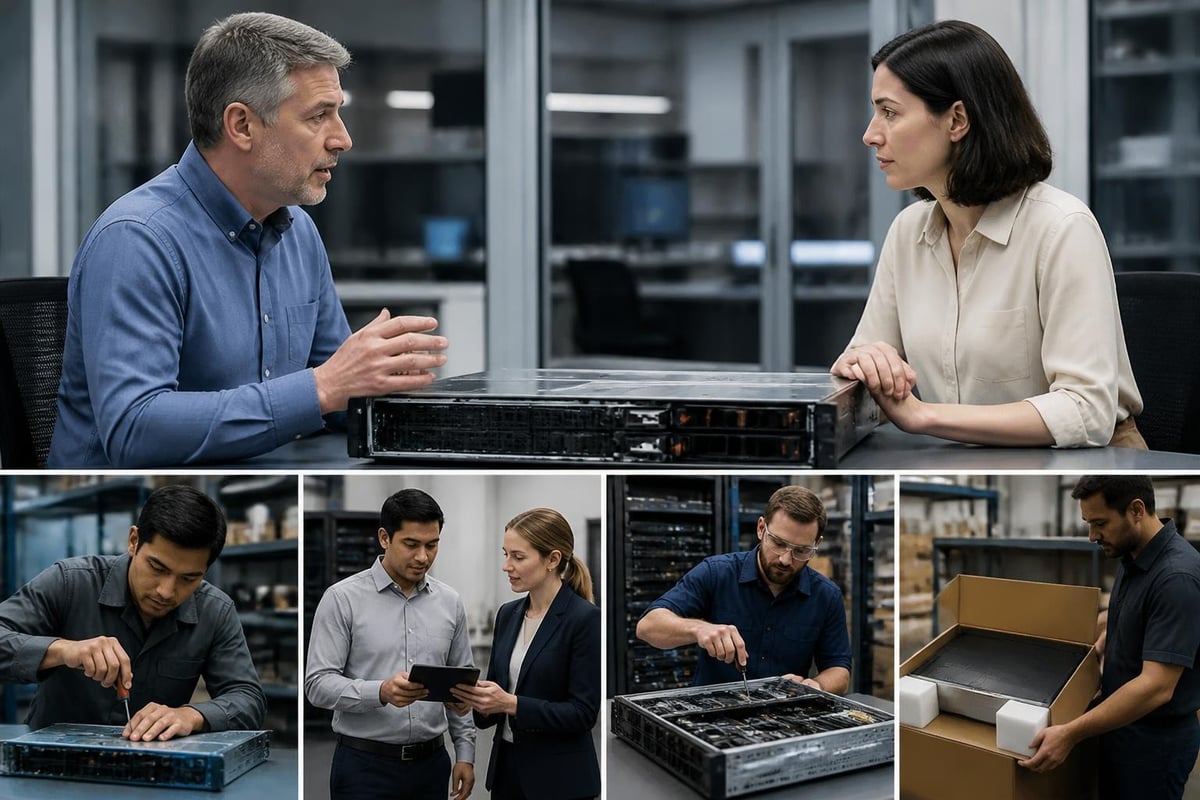
Many organizations request servers arrive pre-configured with operating systems, management agents, or specific firmware versions. This value-added service reduces deployment time and ensures consistency across multiple units.
Integration services extend to rack-level assembly, where suppliers deliver complete racks with servers installed, cabled, and tested. This approach particularly benefits data center build-outs where speed to deployment directly affects revenue generation timelines.
Financial Considerations and Total Cost Analysis
Purchase price represents one component of server total cost of ownership. Comprehensive financial analysis considers power consumption, cooling requirements, maintenance costs, and eventual disposal expenses over the useful life.
Capital Versus Operational Expenditure Models
Traditional server procurement involves capital expenditure approved through annual budgeting cycles. This model offers ownership benefits but concentrates costs in acquisition year and complicates technology refresh planning.
Alternative financing structures spread costs over time, converting capital expenditure to predictable operational expense. Leasing arrangements, equipment-as-a-service models, and consumption-based pricing align IT spending with actual usage patterns.
Financial model considerations:
- Cash flow impact on quarterly and annual budgets
- Tax treatment of capital assets versus operating expenses
- Balance sheet implications for financial reporting
- Flexibility for technology refresh and scaling
- Total cost including interest and service fees
A sophisticated computer server supplier UAE businesses partner with offers multiple financial structures, recognizing that procurement preferences vary by organization size, industry, and strategic priorities.
Warranty Cost-Benefit Analysis
Extended warranties and enhanced support packages add significant cost to initial procurement. Organizations must evaluate whether these expenses justify the protection and service levels provided.
Factors affecting warranty value include criticality of workloads, internal technical capabilities, risk tolerance for downtime, and availability of spare equipment. Mission-critical systems supporting revenue-generating applications typically justify premium support investments.
Emerging Technologies and Future-Ready Infrastructure
Server technology continues evolving rapidly, with innovations in processor architecture, memory systems, and interconnect technologies reshaping performance capabilities. Organizations must balance adopting cutting-edge solutions against stability requirements.
AI and Machine Learning Workloads
Artificial intelligence applications drive demand for specialized server configurations featuring GPU accelerators, high-bandwidth memory, and fast storage subsystems. These workloads exhibit different performance profiles than traditional transaction processing or web serving applications.
Suppliers with expertise in AI infrastructure help customers navigate the complex landscape of accelerator options, memory configurations, and network fabrics optimized for distributed training workloads.
Edge Computing and Distributed Architectures
The shift toward edge computing introduces new server form factors and environmental requirements. Edge deployments often operate in non-data-center environments with limited cooling, power, and physical security.
Rugged server designs, compact form factors, and enhanced remote management capabilities address edge deployment challenges. A forward-thinking computer server supplier UAE vendor understands these emerging use cases and maintains inventory appropriate for distributed architectures.
Sustainability and Green Computing
Environmental considerations increasingly influence server procurement decisions. Energy-efficient designs reduce operational costs while supporting corporate sustainability commitments. Organizations evaluate power consumption, cooling requirements, and equipment recyclability during vendor selection.
Suppliers demonstrating commitment to circular economy principles through take-back programs, refurbishment services, and responsible recycling differentiate themselves in environmentally-conscious markets.
Building Strategic Supplier Relationships
Transactional vendor relationships focused solely on price optimization miss opportunities for strategic value creation. Long-term partnerships with trusted suppliers yield benefits beyond immediate procurement savings.
Collaborative Planning and Roadmap Alignment
Strategic suppliers invest time understanding customer business objectives, growth trajectories, and technology strategies. This insight enables proactive recommendations, capacity planning support, and early access to emerging technologies.
Regular business reviews, technology roadmap discussions, and joint planning sessions characterize mature supplier relationships. These interactions surface opportunities for optimization, identify potential challenges before they become critical, and align procurement activities with business objectives.
Ecosystem Coordination
Modern IT infrastructure extends beyond individual servers to encompass storage systems, network equipment, software licensing, and professional services. Suppliers who coordinate across this ecosystem simplify procurement, reduce integration complexity, and accelerate deployment timelines.
Single-source procurement strategies offer administrative efficiency but risk vendor lock-in. Organizations must balance consolidation benefits against maintaining competitive tension and avoiding excessive dependence on any single supplier.
Selecting the right computer server supplier UAE partnership requires balancing technical capabilities, regulatory compliance, service quality, and commercial terms. Organizations investing time in thorough vendor evaluation, clear requirements definition, and relationship building position themselves for infrastructure success that supports business objectives over years of technology evolution. Whether you need a single server or planning a complete data center build-out, Global Tronix Computer Trading LLC delivers the expertise, inventory depth, and customer commitment that transforms IT procurement from a transaction into a strategic advantage for enterprises across the UAE and Africa.
