- +971 56 918 6895
- sales@globaltechuae.com
- Salah Al Din Road, Deira, Dubai-UAE

HPE Storage Supplier UAE: Enterprise Solutions Guide


Enterprises across the United Arab Emirates face unprecedented data growth, requiring sophisticated storage infrastructure that balances performance, scalability, and compliance. Selecting the right hpe storage supplier uae partner determines whether your organization can harness data as a competitive advantage or struggle with bottlenecks and security vulnerabilities. HPE storage solutions have gained significant traction in the region due to their hybrid cloud capabilities, AI-driven management, and alignment with UAE regulatory frameworks. Understanding the supplier landscape, technical requirements, and deployment considerations enables IT leaders to make informed decisions that support both immediate operational needs and long-term digital transformation objectives.
Understanding HPE Storage Solutions in the UAE Market
The UAE technology landscape demands storage infrastructure that addresses unique regional requirements including regulatory compliance, climate considerations, and rapid business growth. HPE offers a comprehensive portfolio spanning all-flash arrays, hybrid systems, and software-defined storage platforms.
Key HPE Storage Product Lines
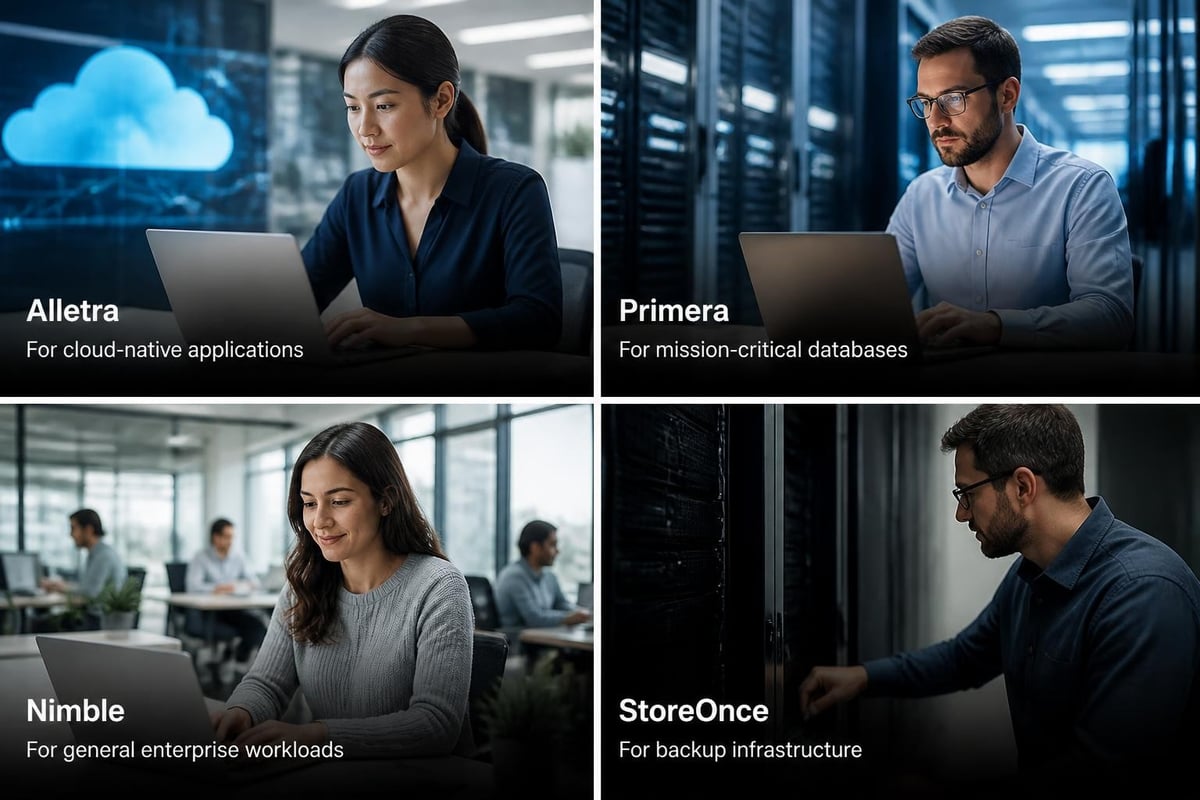
HPE Alletra represents the company's newest storage platform, delivering cloud-native storage services through a consumption-based model. The HPE Alletra platform provides AI-driven operations that eliminate manual tuning and reduce administrative overhead by up to 93%. Organizations benefit from guaranteed 100% availability through predictive analytics that identify potential issues before they impact operations.
Primary HPE storage families include:
- HPE Alletra (cloud-native, all-flash arrays)
- HPE Primera (mission-critical workloads)
- HPE Nimble Storage (intelligent flash arrays)
- HPE 3PAR StoreServ (legacy enterprise systems)
- HPE StoreOnce (backup and recovery)
Each platform addresses different use cases and budget considerations. Mission-critical applications requiring sub-millisecond latency typically deploy on Primera, while cost-conscious organizations with predictable workloads may opt for Nimble Storage.
Regional Market Dynamics
The UAE storage market has experienced consistent growth driven by smart city initiatives, financial services expansion, and government digitalization programs. According to regional market analysis, Middle East organizations are prioritizing hybrid cloud storage architectures that enable data sovereignty while maintaining global connectivity.
Climate considerations influence storage deployment in the UAE. Data centers must account for ambient temperatures that can exceed 50°C during summer months. HPE storage systems include thermal management features and redundant cooling dependencies that ensure reliability in challenging environmental conditions.
| Market Driver | Impact on Storage Requirements | HPE Solution Advantage |
|---|---|---|
| Data sovereignty regulations | Local data retention, audit trails | On-premises deployment with cloud management |
| Financial services growth | High availability, low latency | Primera 99.9999% uptime guarantee |
| Smart city projects | IoT data ingestion, real-time analytics | Alletra scalability and performance |
| Hybrid work models | Remote access, data protection | Cloud integration and backup solutions |
Evaluating HPE Storage Suppliers in the UAE
Selecting an hpe storage supplier uae partner requires assessment beyond product pricing. Implementation expertise, local support capabilities, and regulatory knowledge significantly impact total cost of ownership and project success rates.
Supplier Qualification Criteria
Technical certifications validate supplier competency with HPE technologies. Look for partners maintaining HPE Gold, Platinum, or Diamond tier status, which requires certified technical staff and proven implementation track records. These designations ensure suppliers have completed rigorous training and maintain ongoing technical relationships with HPE.
Local presence matters for warranty fulfillment and emergency support. Suppliers with UAE-based technical staff provide faster response times compared to regional partners operating from neighboring countries. Same-day parts replacement and on-site engineering support become critical during outage scenarios.
Financial stability determines whether suppliers can support multi-year engagements and honor warranty commitments. Request financial references and verify supplier standing with HPE through direct channel verification.
Services and Support Capabilities
Storage implementation extends beyond hardware installation. Comprehensive suppliers provide:
- Pre-sales assessment including capacity planning and workload analysis
- Architecture design that integrates storage with existing infrastructure
- Professional installation with cabling, rack integration, and initial configuration
- Data migration services minimizing downtime during transitions
- Post-deployment optimization through performance monitoring and tuning
- Training programs for internal IT staff
- Managed services options for ongoing administration
The UAE Ministry of Finance guidelines on sustainable digital services emphasize supplier accountability for lifecycle management, including energy efficiency reporting and end-of-life recycling programs.
Regulatory Compliance and Security Requirements
UAE organizations must navigate complex regulatory frameworks governing data protection, privacy, and critical infrastructure security. Your hpe storage supplier uae partner should demonstrate comprehensive understanding of these requirements.
SIRA and Data Protection Standards
The Security Industry Regulatory Agency (SIRA) establishes security conditions and requirements for storage services operating in the UAE. These standards mandate physical security controls, access management protocols, and incident response capabilities.
Key SIRA requirements affecting storage procurement:
- Segregation of customer data through logical or physical separation
- Encryption at rest and in transit using approved algorithms
- Role-based access control with audit logging
- Regular security assessments and penetration testing
- Disaster recovery capabilities with defined recovery objectives
HPE storage platforms incorporate these security features natively. InfoSight predictive analytics monitor security events and configuration drift, alerting administrators to potential compliance violations before audit findings occur.

Industry-Specific Regulations
Financial institutions must comply with Central Bank of the UAE technology risk management guidelines requiring redundant storage systems and specific data retention periods. Healthcare providers face additional constraints under health data privacy regulations.
Government entities procuring storage solutions follow stricter vendor qualification processes including security clearance verification and local content requirements. Suppliers supporting government contracts need documented compliance programs and dedicated security personnel.
Technical Considerations for HPE Storage Deployment
Successful storage implementations require careful planning across multiple technical dimensions. Working with an experienced hpe storage supplier uae partner ensures these factors receive appropriate attention during design and deployment phases.
Capacity Planning and Scalability
Storage capacity planning begins with workload characterization. Categorize applications by performance requirements, data growth rates, and availability expectations.
| Workload Type | Typical Requirements | Recommended HPE Platform |
|---|---|---|
| Transactional databases | High IOPS, low latency | HPE Primera or Alletra |
| Virtual desktop infrastructure | Predictable performance, moderate capacity | HPE Nimble Storage |
| File services | Large capacity, moderate performance | HPE Nimble with CIFS/NFS |
| Backup targets | Massive capacity, deduplication | HPE StoreOnce |
| Development/test | Cost-effective, flexible | HPE Nimble or cloud storage |
Growth projections should account for data retention policies, application expansions, and technology refresh cycles. HPE storage systems scale both vertically (adding capacity to existing arrays) and horizontally (distributing workloads across multiple systems).
Similar to considerations when selecting servers for growing businesses, storage infrastructure should provide headroom for unexpected growth without requiring forklift upgrades.
Network Integration and Performance
Storage performance depends heavily on network architecture. All-flash arrays capable of millions of IOPS become bottlenecked when connected through inadequate networking infrastructure.
Network design considerations:
- 25GbE or 100GbE connectivity for all-flash arrays
- Redundant fabric paths eliminating single points of failure
- Quality of Service (QoS) policies preventing storage traffic starvation
- Direct-attached options for latency-sensitive applications
- Fibre Channel for legacy enterprise applications
- iSCSI over dedicated networks for cost-conscious deployments
HPE storage supports multiple connectivity options simultaneously, enabling organizations to match connection types to application requirements rather than standardizing on single protocols.
Hybrid Cloud Integration
Modern storage strategies incorporate cloud resources for disaster recovery, development environments, and capacity bursting. HPE GreenLake provides cloud consumption models for on-premises infrastructure, while HPE Cloud Volumes deliver native cloud storage services.
Integration capabilities enable:
- Automated tiering moving cold data to cloud storage
- Cloud-based disaster recovery replicating critical data to Azure or AWS
- Backup offloading archiving older backups to cost-effective cloud storage
- Analytics processing leveraging cloud compute against on-premises data
When evaluating server brands for business infrastructure, consistent vendor ecosystems simplify hybrid cloud architectures through unified management interfaces and support relationships.
Implementation Best Practices and Common Pitfalls
Even technically sound storage solutions fail when implementation processes overlook critical details. Learning from common deployment challenges improves project success rates.
Pre-Deployment Validation
Proof of concept testing validates vendor claims and confirms compatibility with existing infrastructure. Request demonstration systems running representative workloads before finalizing purchases. Many suppliers provide evaluation units for 30-60 day trials.
Environmental preparation prevents installation delays. Confirm adequate:
- Power circuits with appropriate amperage ratings
- Cooling capacity for heat dissipation requirements
- Floor load ratings for rack weight
- Network ports with correct transceiver types
- Physical space including service clearances
Documentation requirements often get overlooked. Establish configuration management databases capturing storage LUN mappings, host connections, and replication relationships before systems enter production.
Data Migration Strategies
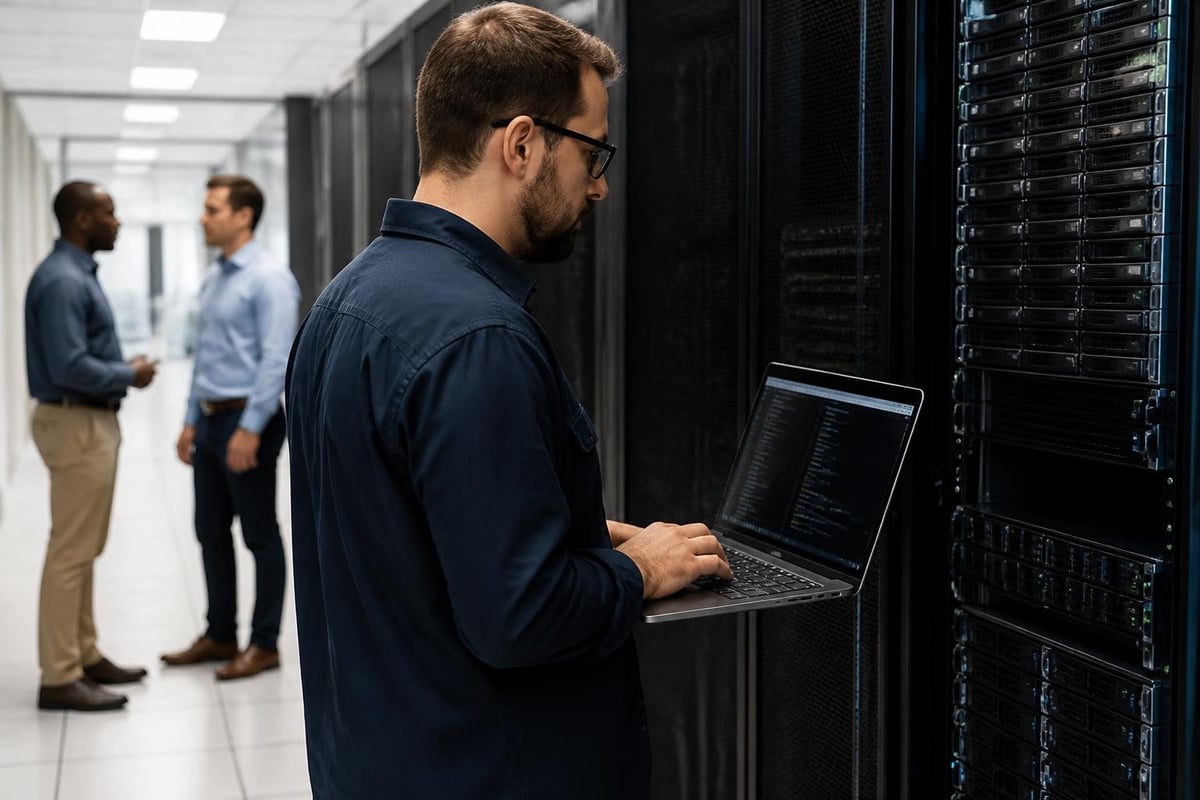
Moving data from legacy storage to new HPE systems requires careful orchestration minimizing business disruption. Migration approaches include:
Big bang cutover transitions all workloads during scheduled maintenance windows. This approach works well for smaller environments but creates significant risk and extended outages for large deployments.
Phased migration moves workloads incrementally, validating functionality before proceeding. Most enterprises prefer this approach despite longer project timelines.
Storage virtualization using tools like HPE StoreVirtual creates abstraction layers enabling transparent migration. Applications continue operating while backend storage transitions occur.
According to enterprise storage vendor strategies, modern storage platforms increasingly incorporate migration tools simplifying transitions from competitive systems.
Performance Optimization
Initial configurations rarely deliver optimal performance. Post-deployment tuning includes:
- Queue depth adjustments matching application I/O patterns
- Cache allocation based on working set characteristics
- Tiering policies aligning with data access frequencies
- Snapshot schedules balancing protection and overhead
- Compression evaluation weighing capacity gains against CPU utilization
HPE InfoSight provides AI-driven recommendations identifying optimization opportunities through machine learning analysis of performance telemetry and global knowledge bases.
Cost Models and Procurement Strategies
Understanding total cost of ownership enables accurate budget planning and vendor comparison. HPE storage supplier UAE partners offer various procurement models aligning with organizational preferences.
Traditional Capital Expenditure
Outright purchases provide perpetual ownership with depreciation benefits. Organizations maintaining on-premises data centers often prefer capital expenditure models maintaining physical asset control.
Cost components include:
- Hardware acquisition (controllers, drives, enclosures)
- Software licensing (replication, encryption, management)
- Installation services and project management
- Annual support contracts (maintenance and upgrades)
- Extended warranties beyond standard coverage
Volume discounts and promotional programs reduce effective pricing. Larger deployments negotiating multi-year commitments achieve better unit economics than piecemeal purchases.
Consumption-Based Pricing
HPE GreenLake delivers storage as-a-service with monthly billing based on actual capacity utilization. This operational expenditure model eliminates upfront capital requirements and transfers refresh risk to HPE.
| Procurement Model | Advantages | Considerations |
|---|---|---|
| Capital purchase | Asset ownership, depreciation benefits | Large upfront cost, refresh responsibility |
| Operating lease | Fixed monthly payments, predictable budgeting | Higher total cost, lease obligations |
| HPE GreenLake | Pay-per-use, included refresh, no CapEx | Minimum commitments, contract complexity |
| Rental | Short-term flexibility, try-before-buy | Highest per-unit cost, limited for permanent needs |
Financial analysis should incorporate opportunity costs of capital deployment, tax implications, and strategic flexibility requirements. CFO involvement in procurement decisions ensures alignment with corporate financial strategies.
Supplier Negotiation Tactics
Competitive bidding establishes market pricing baselines. Engage multiple qualified suppliers with identical technical specifications ensuring apples-to-apples comparisons.
Negotiation leverage points:
- Year-end quota pressure driving aggressive discounting
- Multi-product bundling combining storage with compute infrastructure
- Multi-year commitments providing revenue visibility
- Payment terms including early payment discounts
- Professional services bundling reducing hourly rates
Reference customer visits validate supplier capabilities and uncover implementation insights not evident during sales processes. Speaking directly with similar organizations about their experiences provides valuable perspective beyond vendor-provided case studies.
Supplier Relationship Management
The relationship with your hpe storage supplier uae partner extends years beyond initial purchase. Effective relationship management maximizes investment value and ensures responsive support.
Support and Escalation Processes
Clearly defined support processes prevent confusion during critical incidents. Document:
- Primary and secondary technical contacts with direct phone numbers
- Escalation paths for issues exceeding initial response capabilities
- Service level agreements specifying response and resolution times
- Parts replacement procedures including emergency shipping
- Remote access protocols for troubleshooting sessions
Regular business reviews with suppliers maintain relationship health. Quarterly meetings reviewing performance metrics, upcoming projects, and technology roadmaps ensure alignment between organizational needs and supplier capabilities.
Technology Refresh Planning
Storage systems typically operate 5-7 years before performance or capacity limitations necessitate replacement. Proactive refresh planning prevents reactive emergency purchases under unfavorable conditions.
Suppliers offering trade-in programs reduce refresh costs by crediting residual value from existing systems. Some HPE partners provide guaranteed buyback pricing when purchasing new systems, removing uncertainty from future upgrade budgets.
Just as organizations periodically evaluate laptop options for workforce productivity, storage infrastructure requires regular assessment against evolving business requirements and available technologies.
Training and Knowledge Transfer
Supplier-provided training develops internal capabilities reducing dependence on external resources. Request:
- Administrator training covering daily operations
- Advanced courses on troubleshooting and optimization
- Architecture workshops for planning expansion projects
- Certification preparation support for IT staff
Knowledge transfer during implementations ensures internal teams understand configuration decisions and can maintain systems post-deployment. Insist on documentation deliverables including network diagrams, configuration exports, and operational runbooks.
Selecting the right HPE storage supplier in the UAE requires balancing technical capabilities, regulatory compliance, and long-term partnership potential. Organizations prioritizing these factors alongside competitive pricing position themselves for storage infrastructure that scales with business growth while maintaining security and performance standards. Whether you're planning initial storage deployments or modernizing existing infrastructure, Global Tronix Computer Trading LLC provides expert guidance and comprehensive HPE storage solutions tailored to UAE market requirements. Contact our team to discuss your specific storage needs and discover how enterprise-grade infrastructure can accelerate your digital transformation initiatives.
