- +971 56 918 6895
- sales@globaltechuae.com
- Salah Al Din Road, Deira, Dubai-UAE

Wholesale Desktop Buying Guide for Businesses in 2026


Purchasing desktop computers in bulk has become a critical strategic decision for businesses, educational institutions, and government organizations across Africa and the UAE in 2026. The wholesale desktop market offers significant cost advantages compared to retail purchasing, but navigating supplier relationships, technical specifications, and pricing structures requires expertise and careful planning. Whether you're equipping a new office, upgrading an existing IT infrastructure, or reselling computers to end customers, understanding the wholesale purchasing process ensures you maximize value while meeting your organization's specific computing requirements.
Understanding the Wholesale Desktop Market Landscape
The wholesale desktop computer industry operates fundamentally differently from retail channels. When businesses engage with wholesale suppliers, they access manufacturer-direct pricing, volume discounts, and specialized business services that aren't available through consumer retail outlets. This market segment has experienced renewed growth in 2026 as hybrid work models drive demand for reliable office computing equipment.
Market trends in desktop computers show that the wholesale sector benefits from stable demand patterns, particularly in emerging markets where organizations are expanding their digital capabilities. The pricing structure in wholesale channels reflects several key factors:
- Order volume and minimum quantity requirements
- Payment terms and credit arrangements
- Shipping logistics and delivery schedules
- Warranty coverage and technical support options
- Customization services and pre-installation requests
Understanding these dynamics helps buyers negotiate effectively and establish long-term supplier relationships. The wholesale computer pricing landscape varies significantly based on geographic location, supplier capabilities, and current component availability.

Evaluating Technical Specifications for Bulk Purchases
Selecting the right wholesale desktop specifications requires balancing current needs with future scalability. Unlike consumer purchases where individual preferences dominate, bulk buying decisions must account for standardization, support efficiency, and total cost of ownership across the entire fleet.
Processor and Performance Requirements
The CPU remains the most critical component determining overall system performance. In 2026, businesses typically choose between Intel Core and AMD Ryzen processors, with selection based on workload requirements. For general office productivity, mid-range processors offer excellent value, while specialized tasks like video editing, CAD work, or data analysis demand higher-performance options.
When evaluating desktop computer features, consider these processor-related factors:
- Core count and thread performance for multitasking capabilities
- Clock speed specifications for single-threaded application performance
- Integrated graphics versus dedicated GPU requirements
- Power consumption and thermal management impacting operating costs
- Upgrade path availability for extending system lifespan
Memory and Storage Configurations
RAM capacity directly impacts system responsiveness and application performance. Standard business desktops in 2026 typically include 16GB RAM as a baseline, with 32GB becoming increasingly common for professional workstations. Storage decisions now focus primarily on SSD technology, with traditional hard drives relegated to secondary storage or archive purposes.
| Use Case | Recommended RAM | Storage Configuration | Typical Applications |
|---|---|---|---|
| Basic Office | 8-16GB | 256GB SSD | Email, web browsing, documents |
| Standard Business | 16GB | 512GB SSD | Productivity suites, CRM, light multitasking |
| Professional Workstation | 32GB | 1TB SSD + HDD | Design software, development, virtualization |
| Specialized Computing | 64GB+ | 2TB NVMe SSD | Video editing, 3D rendering, data science |
Storage expandability matters significantly in wholesale desktop planning. Systems with multiple drive bays and M.2 slots provide flexibility for future upgrades without replacing entire units.
Supplier Selection and Relationship Management
Choosing the right wholesale desktop supplier impacts not just initial purchase costs but long-term operational efficiency. Established suppliers in the UAE and African markets offer different value propositions, from pure price competition to comprehensive service packages.
Evaluating Supplier Capabilities
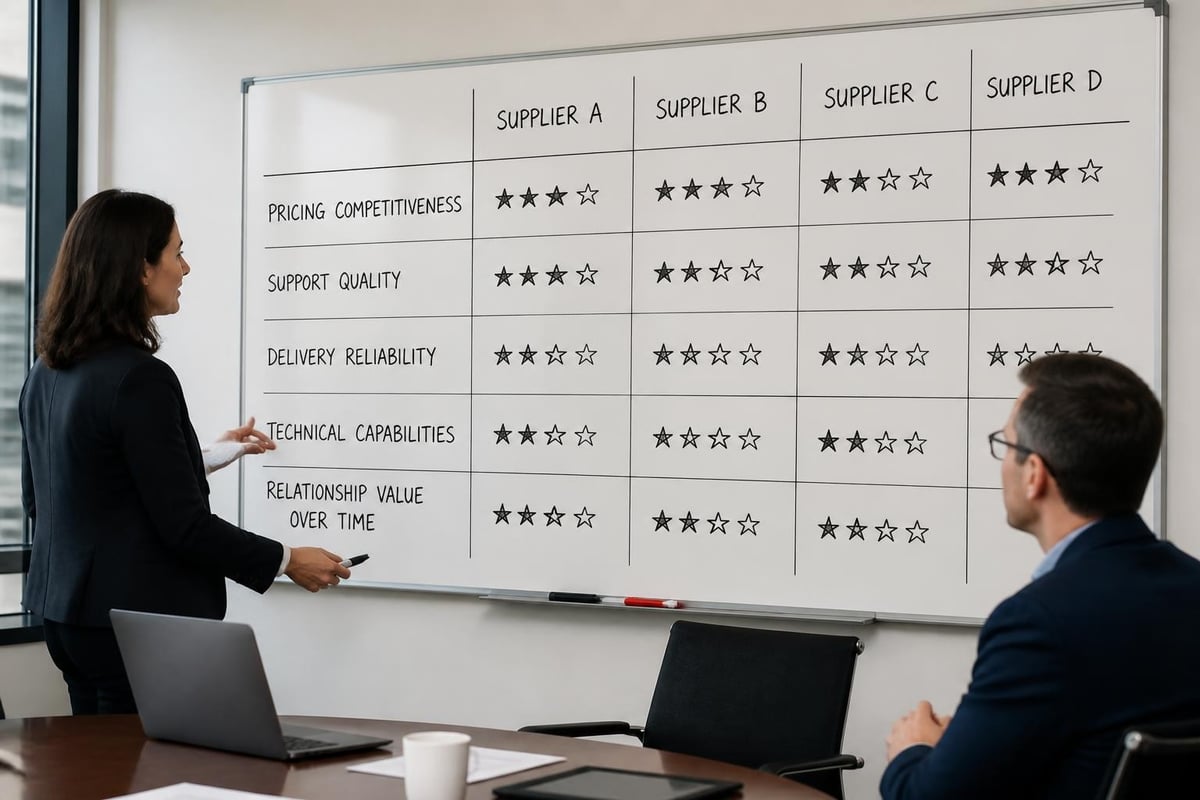
Before buying computers in bulk, assess potential suppliers across multiple dimensions. Price represents just one factor in the total value equation. Reliability, technical support quality, and logistics capabilities often differentiate exceptional suppliers from adequate ones.
Critical supplier evaluation criteria include:
- Financial stability and industry reputation
- Inventory depth and product availability
- Technical expertise and pre-sales consultation
- After-sales support infrastructure
- Customization and configuration services
- Warranty administration and RMA processes
Geographic proximity affects shipping costs and delivery timelines, particularly important when sourcing PCs for enterprise deployments. Suppliers with local warehousing in the UAE or regional distribution centers can significantly reduce total acquisition time.
Negotiation Strategies and Contract Terms
Wholesale desktop pricing operates on negotiable terms, especially for substantial orders. Volume commitments unlock preferential pricing tiers, but buyers should balance discount levels against inventory risk and cash flow considerations.
Effective negotiation addresses these key contract elements:
- Unit pricing with volume tier breakpoints
- Payment terms and early payment discounts
- Delivery schedules and partial shipment options
- Warranty coverage duration and service level agreements
- Return policies and defective unit replacement
- Price protection clauses for market fluctuations
Building strategic supplier partnerships generates long-term value beyond individual transactions. Regular communication, transparent requirement sharing, and fair negotiation practices encourage suppliers to prioritize your organization during component shortages or tight market conditions.
New Versus Refurbished Wholesale Desktop Options
Budget constraints often lead organizations to consider refurbished or used desktop computers as alternatives to new systems. The used computers bulk buying market offers significant cost savings but requires additional due diligence and quality assessment.
Advantages of New Wholesale Desktops
New systems provide maximum reliability, full manufacturer warranties, and latest-generation components. Organizations establishing new facilities or upgrading from significantly outdated equipment typically benefit most from new wholesale desktop purchases.
Key benefits include:
- Full manufacturer warranty coverage (typically 1-3 years)
- Latest security features and hardware capabilities
- Predictable performance and reliability metrics
- Simplified procurement and asset management
- Consistent specifications across entire deployment
When Refurbished Makes Strategic Sense
Refurbished wholesale desktop computers suit specific scenarios where budget constraints outweigh the need for cutting-edge performance. Educational institutions, non-profit organizations, and businesses with basic computing requirements often find excellent value in professionally refurbished systems.
Quality refurbished programs offer:
- 30-50% cost savings compared to equivalent new systems
- Professional testing and certification from reputable refurbishers
- Limited warranty coverage (typically 90 days to 1 year)
- Environmental sustainability benefits through equipment reuse
Risk mitigation requires working exclusively with certified refurbishers who provide detailed system testing reports and stand behind their products with meaningful warranties.
Deployment Planning and Implementation
Successful wholesale desktop implementation extends beyond the purchase transaction. Organizations must plan deployment logistics, configuration requirements, and ongoing support infrastructure to realize full value from their investment.
Pre-Deployment Configuration Services
Many wholesale suppliers offer configuration services that reduce internal IT workload during deployment. These services can include:
| Service Type | Description | Value Proposition |
|---|---|---|
| OS Installation | Pre-loaded operating systems with licensing | Reduces setup time per unit |
| Software Imaging | Custom application suite installation | Ensures standardization across fleet |
| Asset Tagging | Physical labels and inventory integration | Simplifies asset management |
| Security Hardening | BIOS passwords, encryption setup | Enhances security posture from day one |
| Network Configuration | Domain joining, initial settings | Accelerates user onboarding |
Investing in these services typically reduces total deployment cost despite higher upfront pricing, as internal IT resources focus on strategic activities rather than repetitive configuration tasks.

Quality Assurance and Acceptance Testing
Large wholesale desktop orders warrant formal acceptance testing procedures. Before full deployment, sample units should undergo comprehensive testing covering:
- Hardware functionality verification across all components
- Performance benchmarking against specifications
- Compatibility testing with existing infrastructure
- Documentation review for completeness and accuracy
- Warranty activation and support channel validation
Establishing clear acceptance criteria in purchase contracts protects buyers and provides recourse if delivered systems fail to meet specifications.
Total Cost of Ownership Considerations
Understanding the complete financial impact of wholesale desktop purchases requires analysis beyond initial acquisition costs. Total cost of ownership (TCO) encompasses expenses throughout the system lifecycle, typically spanning 3-5 years for business desktop computers.
Direct and Indirect Cost Components
Direct costs include:
- Initial purchase price and shipping
- Operating system and software licensing
- Extended warranty or support contracts
- Peripheral devices and accessories
- Deployment and configuration services
Indirect costs encompass:
- Energy consumption during operation
- IT support and maintenance labor
- Downtime impact from system failures
- Upgrade and expansion investments
- End-of-life disposal or recycling
Systems with higher initial costs but superior energy efficiency, reliability, and serviceability often demonstrate lower TCO compared to budget alternatives that generate ongoing operational expenses.
Lifecycle Management Strategies
Effective wholesale desktop fleet management optimizes replacement timing to balance performance needs against budget cycles. Organizations typically adopt one of these approaches:
- Wholesale replacement: Complete fleet refresh every 3-4 years
- Rolling refresh: Annual replacement of oldest 25-33% of systems
- Performance-based: Replace systems as they fall below acceptable performance
- Failure-driven: Reactive replacement only when systems fail
Proactive replacement strategies prevent productivity losses from aging hardware while enabling predictable budget planning for computer wholesale procurement.
Market Dynamics and Competitive Considerations
The wholesale desktop industry experiences continuous evolution driven by technological advancement, component availability, and competitive pressures. Understanding these dynamics helps buyers make informed decisions and anticipate market shifts.
Industry Competition and Market Forces
Competitive dynamics in wholesale computer distribution reflect several key forces. Supplier consolidation has reduced the number of major manufacturers while increasing their market power. Simultaneously, new distribution channels and direct-from-manufacturer programs create alternative procurement options.
Buyers benefit from this competitive landscape through:
- Price competition among distributors seeking volume
- Service differentiation as value-added offerings
- Geographic expansion improving local availability
- Customization capabilities tailored to regional needs
Maintaining relationships with multiple suppliers provides negotiating leverage and supply chain resilience when component shortages or other disruptions affect specific vendors.
Technology Trends Affecting Wholesale Desktop Value
Several technological developments in 2026 influence wholesale desktop purchasing decisions. The continued migration toward cloud computing affects local processing requirements for some applications, while emerging technologies like AI and machine learning drive demand for more powerful workstations in other sectors.
Current trends impacting wholesale desktop specifications include:
- Increased SSD adoption replacing traditional hard drives completely
- Higher RAM baselines as minimum configurations rise
- Integrated graphics improvements reducing discrete GPU requirements
- USB-C connectivity becoming standard across all tiers
- Wi-Fi 6E inclusion for wireless network optimization
Buyers should evaluate whether leading-edge specifications deliver meaningful value for their specific use cases or represent premium pricing for unnecessary capabilities.
Risk Mitigation and Contingency Planning
Large wholesale desktop commitments carry inherent risks that prudent organizations address through structured planning and contract provisions. Component shortages, specification changes, and delivery delays can disrupt deployment schedules and impact business operations.
Supply Chain Risk Management
Global component supply chains remain vulnerable to various disruptions. Effective risk mitigation strategies include:
- Staggered delivery schedules reducing dependency on single shipments
- Alternative specification approval allowing substitutions when needed
- Safety stock maintenance for critical replacement components
- Multi-supplier qualification preventing vendor lock-in
Contract provisions should address force majeure scenarios, component substitution rules, and remedies for delivery failures beyond reasonable delays.
Financial Risk Considerations
Large capital commitments for wholesale desktop purchases impact organizational cash flow and budget flexibility. Financial risk management approaches include:
| Strategy | Description | Appropriate When |
|---|---|---|
| Leasing | Operational expense versus capital purchase | Preserving capital, predictable budgets |
| Staged Purchasing | Multiple smaller orders over time | Demand uncertainty, budget constraints |
| Vendor Financing | Extended payment terms from supplier | Cash flow management priority |
| Component Hedging | Price locks for future deliveries | Anticipated price increases |
Each approach carries distinct advantages and tradeoffs requiring evaluation against organizational priorities and financial policies.
Sourcing wholesale desktop computers effectively requires balancing technical specifications, supplier relationships, pricing negotiations, and total cost of ownership across the complete system lifecycle. Success depends on thorough planning, clear requirement definition, and strategic supplier partnerships that extend beyond individual transactions. Whether you're expanding operations in Africa, upgrading facilities in the UAE, or establishing new business locations, Global Tronix Computer Trading LLC provides expert guidance and comprehensive IT solutions tailored to your organization's specific needs. Contact their team today to discuss your wholesale desktop requirements and discover how their extensive product range and regional expertise can support your technology initiatives.
